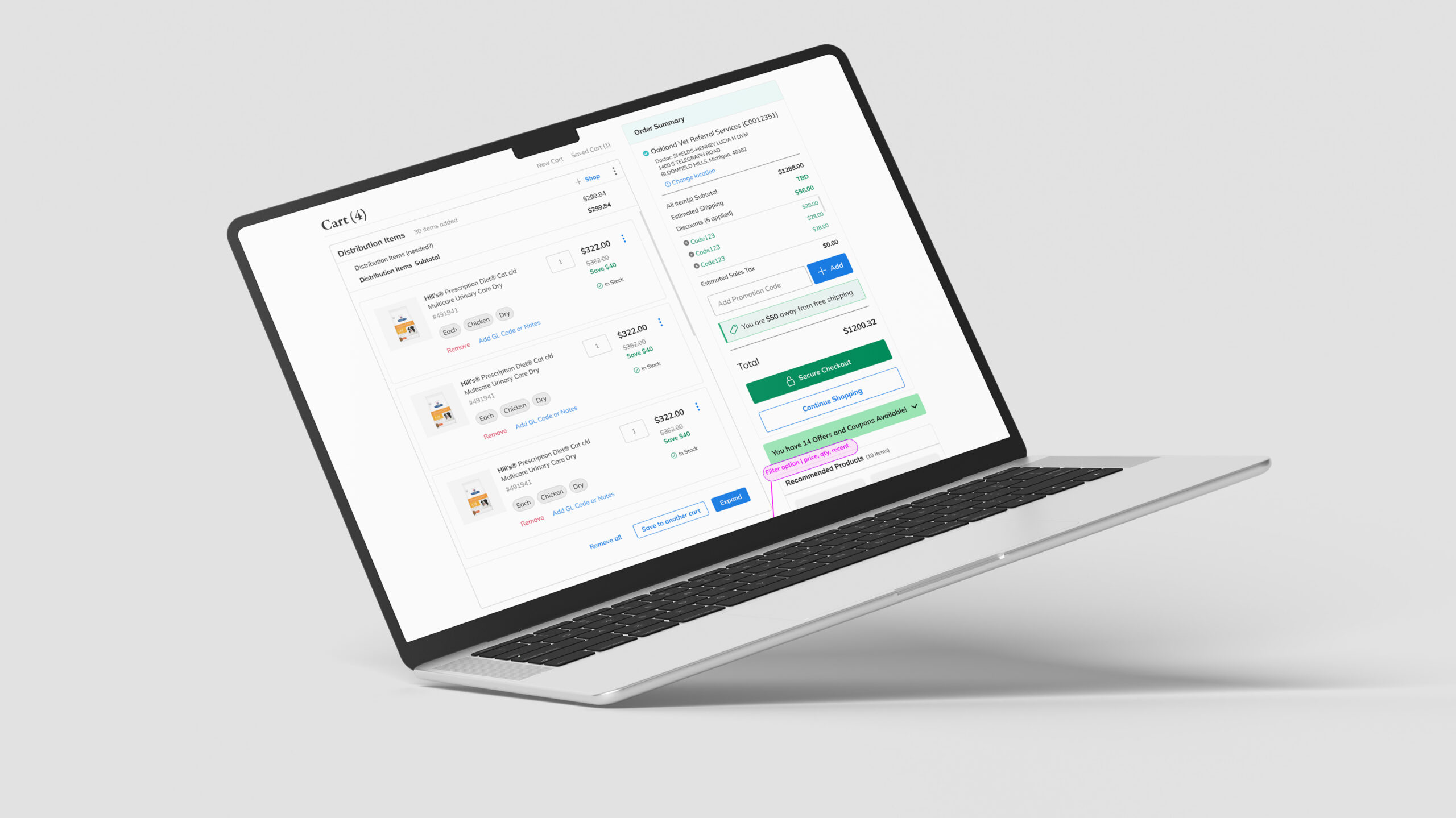
Led UX exploration for a B2B commerce platform, focusing on reducing friction across discovery, selection, and checkout.
The work centered on creating scalable interaction patterns that support speed, clarity, and consistency.
Findings were mapped to usability principles:
clarity, feedback, recovery, and consistency.
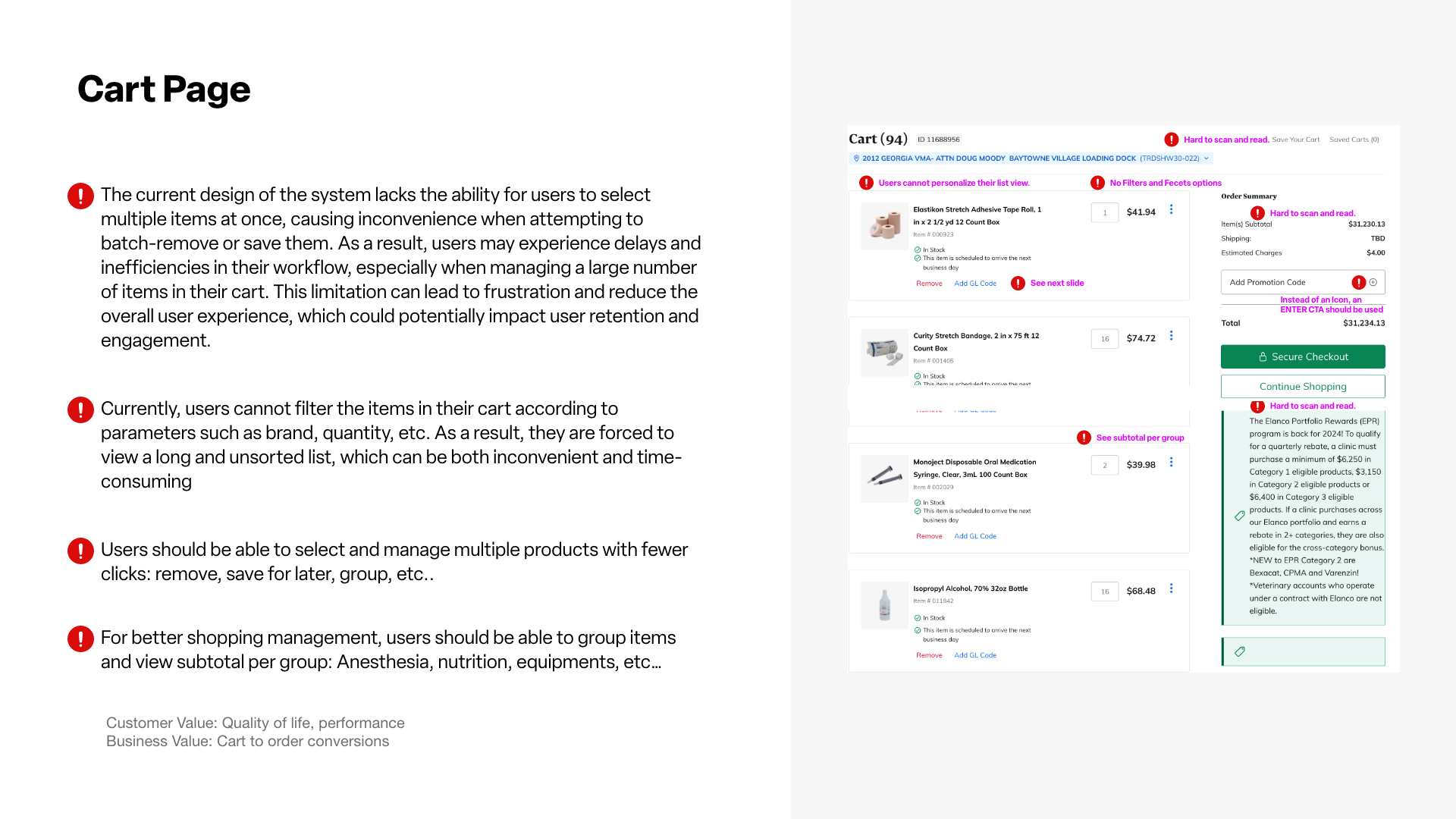
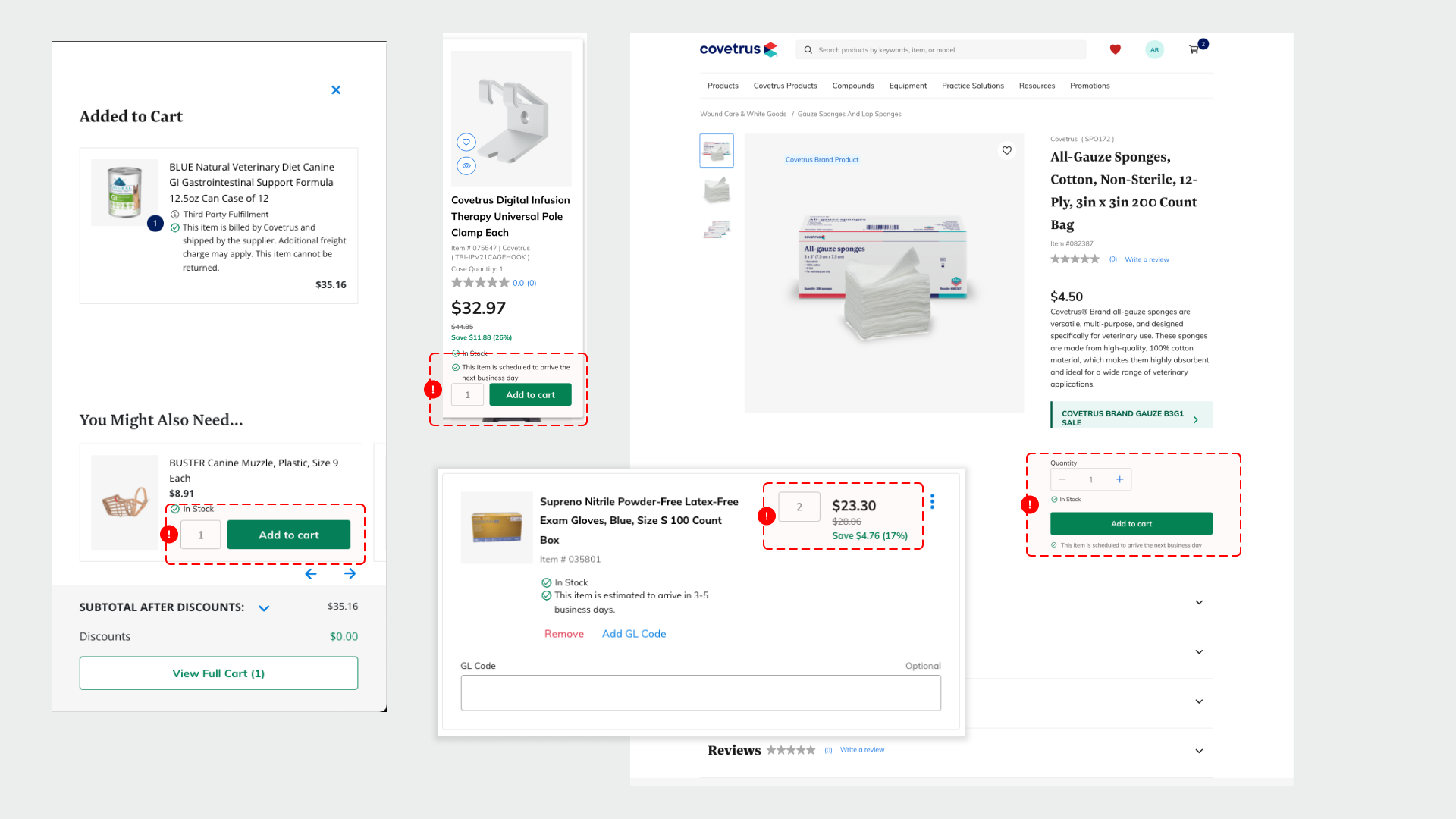
– Inconsistent purchase interactions across surfaces
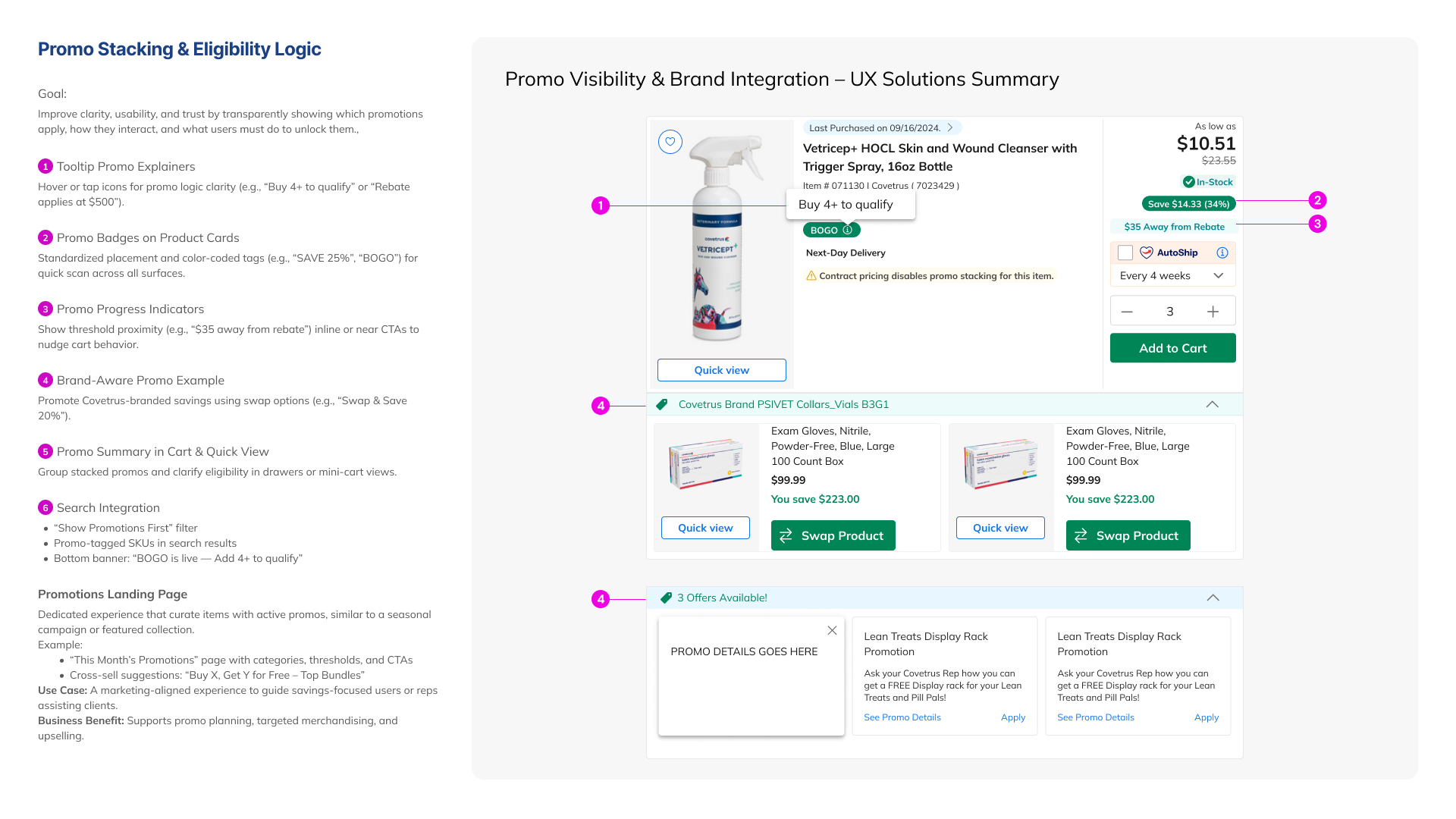
– Unclear promotion logic and eligibility
– Friction in high-frequency ordering behaviors
Special attention was given to edge cases, including:
– Build and manage large carts
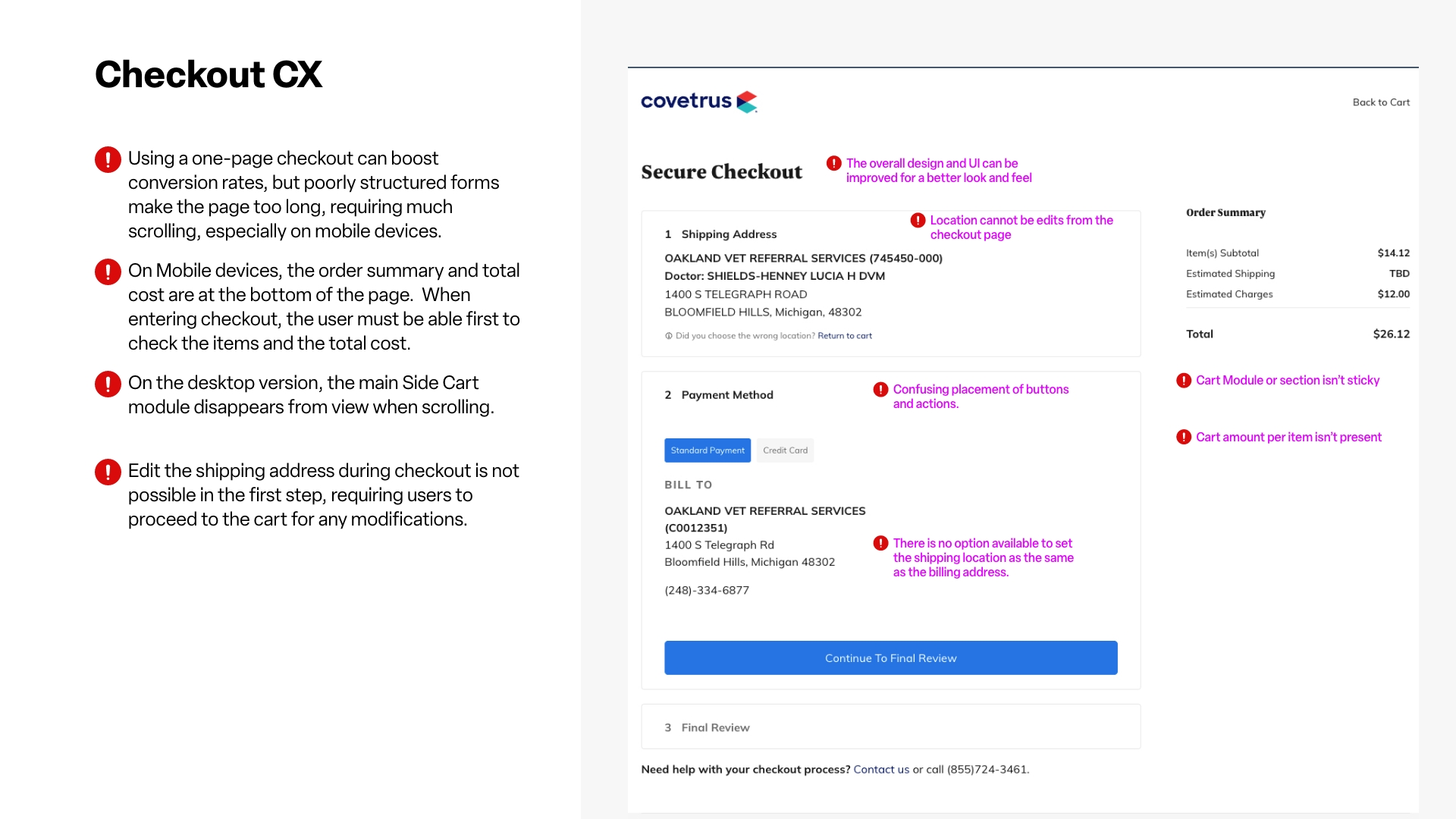
– Resolve delivery and account constraints
– Transition into checkout under time pressure
– Complete payment and final review
DESIGN PRINCIPLES
Reduce decision latency
→ Minimize time between intent and action
Standardize interaction patterns
→ Create predictable behaviors across entry points
Design for repeat behavior
→ Optimize for high-frequency, habitual workflows
Surface value at the point of interaction
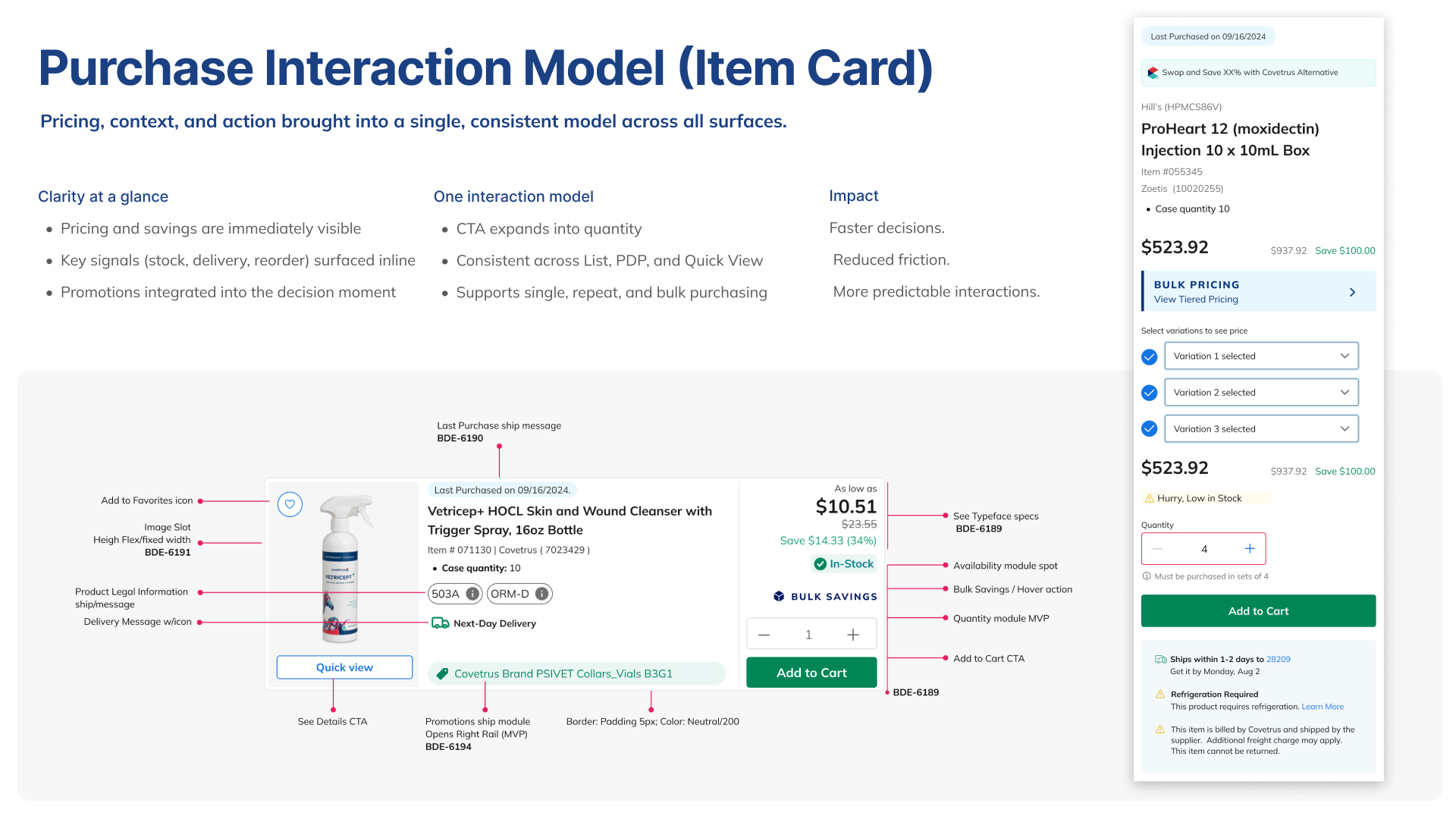
→ Make pricing, savings, and logic immediately visible
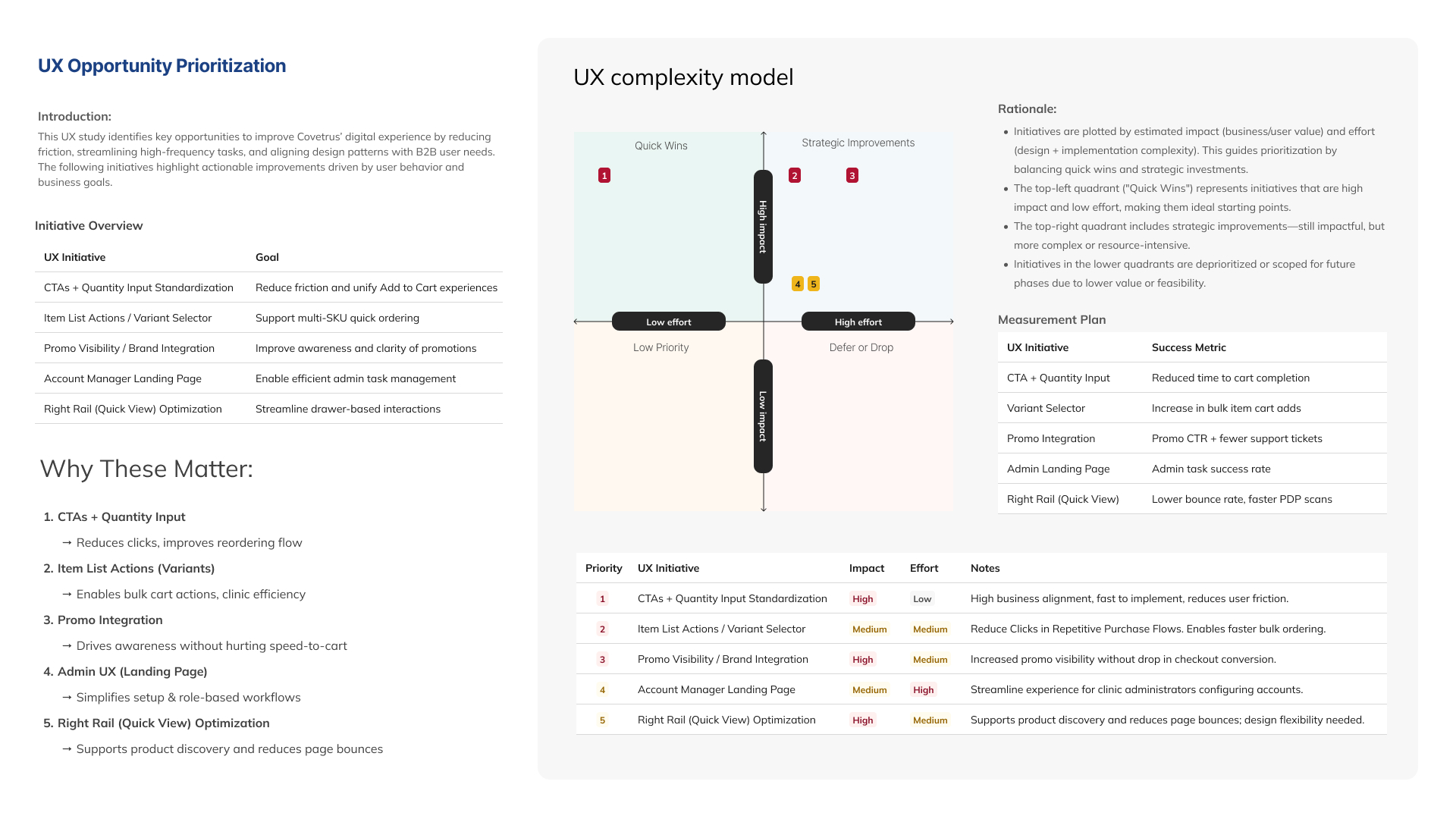
PRIORITIZATION
Focused on high-impact, executable opportunities to reduce friction across core purchase flows.
Opportunities were prioritized based on impact, complexity, and readiness—ensuring effort was focused on changes that would meaningfully improve the experience.
Rather than addressing issues in isolation, the next step was to evaluate them systematically and prioritize where intervention would create the most impact.
SYSTEM (CORE)
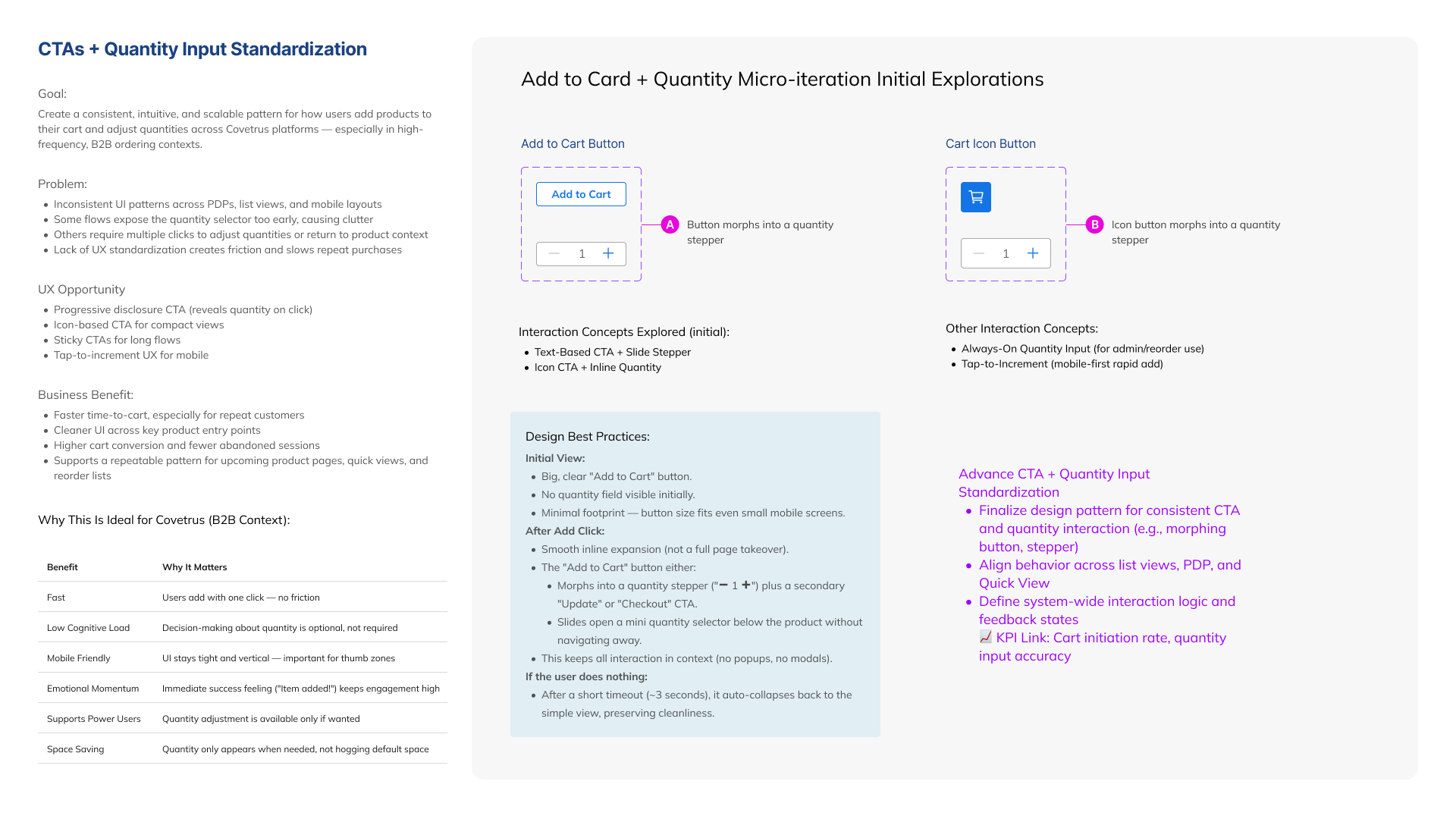
Standardizing purchase interactions
Introduced a unified CTA + quantity model across listing, detail, and quick-view surfaces—reducing friction and improving ordering efficiency.
Fragmentation
– Inconsistent add-to-cart behavior across surfaces